
Agency Success Starts with Leadership: Why Better Processes Aren’t Enough
Agency success is often associated with having the right people, effective processes, and a clear business strategy. These elements are important, but they do not always guarantee consistent performance.
Behind every successful agency is a leader who influences how those processes are implemented, how decisions are made, and how people work towards shared goals.
In his discussion on agency success, Michael Plaxton highlights one often-overlooked factor: leadership is the complex variable that can determine whether an agency’s success formula works in practice.
Even the most carefully designed systems can struggle when leadership mindset and behaviour are not aligned with the agency’s goals. Before trying to fix an agency’s performance, leaders must first be willing to examine and improve themselves.
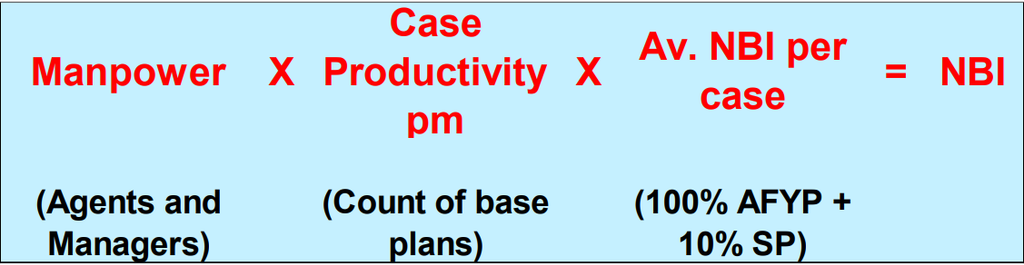
Agency success is not achieved through a single activity or strategy. It is the result of several key factors working together to produce consistent business performance.
In his agency success presentation, Michael Plaxton illustrates this through a straightforward formula:
Where We Left Off
In Journey 48, we reviewed ABC Life Thailand’s performance and found that Agency results had declined sharply in the first half of 2026. That performance must improve significantly in the final six months of the year if targets are to be met.

What Drives Agency Success?
In Journey 20, we examined several important processes that contribute to Agency success. These included leadership style, objective recruitment, smooth onboarding, quality training, close supervision, and a consistent focus on daily activities. Together, these initiatives connect through the simple formula above.
The Critical Performance Levers
Several factors determine whether Agency performance can deliver strong New Business Credit growth:
- Agency size: The number of Agents and Managers matters, especially because Managers often sell as well.
- Productive effectiveness: The productivity and consistency of the sales force are essential.
- Case size: Larger or better-quality cases can materially influence results.
- Market segment mix: The Agents’ market is often described as “Friends and Relatives,” but it should also be understood by its mix of high-net-worth, executive, self-employed, employed, and micro-market customers.
Focus on This Journey
This Journey explores the factors most critical to restoring Agency performance and delivering stronger New Business Credit growth. The focus is on how leadership style and management decisions influence the four critical performance levers: Agency size, productivity effectiveness, case size, and market mix.
A key issue is the Agency Contract. It often sets a low base requirement for Agents, such as one case per quarter, and a modest manpower expectation for Sales Managers, often around four or five people. When these minimum standards are linked to a top-down Agency sales target, they can shape management behavior in ways that limit sustainable growth.

Three Leadership Profiles in Agency
- “Bad Cop, Bad Result”
This type of Manager treats the contract as a blunt instrument: if an Agent misses the minimum goal, the Agent is terminated. The approach appears disciplined, but it often avoids the harder work of diagnosing why performance is weak and how it can be improved.
Since 2015, Agency manpower across the industry has declined by 21.6%. Since 2021, five of the six measured years have shown negative manpower growth. This suggests that an overly punitive management style may protect short-term productivity ratios while weakening the long-term capacity of the Agency channel.
The result is a distorted formula: lower manpower can make productivity appear stronger, but it does not address the underlying drivers of sales growth. International companies may chase productivity as a key metric and set Managers specific targets to meet it. A “Bad Cop, Bad Result” Manager may deliver the productivity number, yet the Agency channel still struggles to generate the sales volume required.
- “Good Cop, Bad Result”
This type of Manager takes the opposite approach. The priority is manpower growth and missed productivity requirements are excused on the assumption that the Agent will improve in the future. This “blind faith” approach may help meet headcount goals, but it does little to build consistent productivity.
As the table indicates, Agent case productivity has changed very little over the last 30 years, largely because this management style tolerates weak activity and delays corrective action. These Managers may meet the manpower target, but the Agency channel still falls short of its full performance potential.
- “Active Coach, Great Result”
Both “Bad Cop” and “Good Cop” Managers rely on shortcuts, and both tend to produce poor long-term results. What Agency needs is a different leadership profile: the “Active Coach, Great Result” Manager. This Manager understands Agents as individuals, recognizes the real challenges of building success in life insurance, and commits to helping each individual Agent succeed.
This leadership style addresses the complex factors behind the critical performance drivers, including recruitment quality, onboarding, Agent goal setting, initial and career training, daily supervision, and the alignment between the Agent’s personal ambitions and the Agency Contract. The next step is to examine the dimensions of this profile in more detail.
As noted earlier, Journey 20 examines in detail the critical processes required for successful Agency management. Those processes remain important, and readers should refer back to Journey 20 for a fuller understanding of them. In this Journey, however, the focus is narrower: the management style that sits behind those processes, and especially the Manager’s mindset.
Vision: “When You Win, I Win”
The “Bad Cop, Bad Result” and “Good Cop, Bad Result” Managers are both inward-looking. Their attention is fixed on their own targets, their own security, and what they believe is required to keep the CEO satisfied. The “Active Coach, Great Result” Manager starts from a different premise: their success depends entirely
on the success of the Agents they lead.
That belief creates a clear vision and strategy: “When you win, I win.” The Manager’s role is not simply to enforce targets or to protect headcount. It is to create the conditions in which Agents can grow, perform, and sustain success. These opposing mindsets lead to very different behaviors and very different outcomes for the Agency.
Planning Before Acting
Active Coaches prepare through data and dialogue before they act. They review both the big-picture performance data for their area of responsibility and the individual data for each Agent. They then ask thoughtful questions—sometimes with the whole team and sometimes one-on-one—to understand what is happening, why it is happening, and what support is needed.
Recruiting for Fit, Not Just Headcount
Good Cop and Bad Cop Managers often recruit simply to meet headcount expectations. Their approach may be as basic as asking friends and relatives to “join me as an Agent so I can meet my quota and protect my job.” Active Coaches recruit differently. They understand the profile of someone likely to succeed in life insurance, then prospect, approach, interview, and assess potential recruits carefully before deciding whether to offer the role.
Just as importantly, Active Coaches are willing to say no with respect. When a candidate’s goals do not match the realities of the role, the Manager can close the conversation constructively: “Thank you for your time today, but I do not think this role is suited to the goals you have for your life. What other career opportunities have you considered, and how might I help you think about them?”
Onboarding With Purpose
For Good Cop and Bad Cop Managers, onboarding is often little more than a breakfast or beer with the team to celebrate another friend or family member joining. The Active Coach treats onboarding as the first step in building commitment, confidence, and discipline. They bring the new Agent into a team meeting, invite existing team members to share the team vision and history, and encourage them to describe how they handled their own first days, challenges, and successes. Often, one team member volunteers to act as a buddy for the new Agent.
The Active Coach then spends focused one-on-one time with the new Agent on two priorities:
- Building an Agent Plan: The plan is not simply a cascaded company target. It begins with the Agent’s purpose in the role, including life goals for themselves and their family. It should include major ambitions, such as a house or car, as well as smaller monthly motivators, such as taking the family to a favorite restaurant.
- Translating goals into daily activity: The Manager helps the Agent connect monthly financial goals to daily behaviors by reviewing the team’s data and showing how effort links to progress through the sales process: prospecting, approaching, fact finding, presenting solutions, closing the sale, and delivering after-sales service.
The Active Coach also reviews the new Agent’s phone network to identify possible market segments from day one. This includes assessing how well the Agent knows each prospect and discussing tailored approaches. The purpose is to treat every potential customer as an individual who requires a thoughtful, specific approach.
The Manager then schedules the appropriate company training programs and the team meetings. These meetings review results, but they also include local training such as role plays and practical coaching. The plan makes it easy for the new Agent to have access to the Manager when help is needed. The repeated message is simple: “When you win, I win.” The Active Coach closes by asking, “How can I help you develop your career?”
Coaching Through Activity
Active Coaches stay close to new Agents during the activities that matter most. They may lead an early-morning telephone clinic for the whole team, while paying particular attention to the new Agent. Before the clinic, they ask practical questions: What is your goal today? How will you make the call? What will you say? Why should this person give you their time? Afterward, the team discusses what happened, what worked, and what can be improved, with the Active Coach adding targeted coaching interventions.
Role play is another core coaching tool. The Active Coach practices appointment setting, fact-finding questions, presenting solutions to the customer’s priority needs, handling common objections, and asking for the close. They also practice how to ask for referred leads at the end of every customer meeting, whether or not a sale was made.
The Active Coach also joins the new Agent in the field, either to observe or to demonstrate the sales process. When demonstrating, the Manager asks the Agent to act as the coach, encouraging the Agent to observe closely, reflect on what happened, and build confidence through active learning.
Monthly Performance Reviews
Every month, without fail, the Active Coach meets each Agent to review the previous month’s performance against the Agent’s own plan. The Manager shares the relevant data and guides the discussion through a consistent set of questions:
- How did last month go?
- How did your performance compare with your plan?
- What went well?
- What did not go so well?
- If you were doing this again, what would you change?
- How can I help this month?
Handling Missed Contract Goals
Earlier, we contrasted the Bad Cop Manager, who fires Agents as soon as contract targets are missed, with the Good Cop Manager, who excuses missed targets to preserve manpower. The Active Coach takes a more disciplined and developmental approach: three consecutive missed contract goals before termination.
The process works as follows:
- First missed month: The Active Coach holds a dialogue to understand the issues, using the same style of review as the monthly planning discussion. The key closing question is: “What will you do differently this month to meet the contract?” The Agent makes a clear action commitment, and the Manager asks how they can help the Agent deliver it.
- Second consecutive missed month: The meeting begins in the same way, but it ends with a stronger intervention. Based on the Agent’s data, the Active Coach proposes an action plan and asks the Agent to commit to it for the month. If the Agent offers an alternative, it must still meet the Manager’s objectives.
- Third consecutive missed month: Termination follows, but it is handled with respect. The Active Coach might say: “I am sorry I was unable to help you achieve the career expectations we discussed. We will continue as friends, but I have to terminate your Agent contract. Let’s discuss how we can take care of your customers through another Agent.”
Conclusion: The Active Coach Mindset
Being an Agency Manager is a full-time 24×7 responsibility. Sustainable success requires more than enforcing contracts, protecting headcount, or reacting to missed targets.
It requires an Active Coaching mindset built on mutual trust, respect, data, dialogue, and consistent follow-through.
The central question for every Agency leader is clear: how will you develop the skills needed to become an Active Coach? By strengthening those skills, Managers can build solid manpower growth, raise productivity to professional standards, and create rewarding careers for the Agents they lead.
Credit : Michael Plaxton – August 20, 2026
This article is part of an ongoing series by Michael Plaxton exploring agency leadership, management practices, productivity, and distribution effectiveness in Thailand’s life insurance industry.
We invite CEOs, RCEOs, Agency Directors, Sales Managers, and distribution leaders to reflect on the Active Coach mindset and consider how their leadership approach can help agents build successful and sustainable careers.

Written : Michael Plaxton
Independent consultant.
Former CEO of FWD Thailand, former CEO of Krungthai-AXA Life Insurance.
This is a Money Playschool x Michael Plaxton collaboration. Find the original article here.